







Efficient and controlled filling
via smart discharge management of the multihead weigher
When combined with multihead weighers, our machines achieve maximum performance, even at high filling volumes. With the help of smart discharge management, our machine pauses filling in the event of minor delays in the multihead weigher. This reduces product loss and results in more ready-to-sell pouches. To ensure the necessary product flow and prevent the dried fruit from clumping, particularly smooth and slippery materials are typically used for parts that come into contact with the product.
Extended shelf life
thanks to minimal residual oxygen levels in the pouch
To ensure that the high-quality fruit keeps its flavor and the shelf life is maximized, it is essential to reduce the residual oxygen level in the pouch to a minimum. We achieve this through our unique gas treatment of the product. With this method, residual oxygen levels of 2–5% are typical.
Versatility and flexibility
with a large variety of filling volumes, pouch types, and products
With our pouch packaging machines, single-serving sizes with small filling volumes, such as 100 g, or larger quantities, such as 1,000 g, can be packaged in stand-up pouches with zippers. Product mixes or product combinations are also possible.

High speeds and output
Achieve consistently high speeds on our pouch packaging machines, even with large filling volumes. Depending on the specific dosing requirements, output rates ranging from 40 to 210 pouches per minute are possible. In the dried fruit sector, single (simplex) to triple (triplex) machines are typically used.


Effective and thorough cleaning
Especially when processing dried fruits, simple and effective cleaning of the parts that come into contact with the product is essential. Our pouch packaging machines are designed for all cleaning processes, from dry to wash-down. This minimizes cleaning and product changeover times – for reduced contamination risks and maximum production reliability.
Precise and efficient filling
Dried fruit is typically filled using multihead weighers, which combine precise weight control with high speed. During the filling process, the dried fruit is handled with utmost care to prevent breakage and quality loss. To reduce the residual oxygen to a minimum, the product is additionally protected by our unique gas treatment. This guarantees the freshness and quality of the dried fruit and ensures a longer shelf life.
Quick and easy format changeovers in <15 minutes
Our machines enable partly tool-free format changeovers in less than 15 minutes, depending on the machine type. Using the integrated recipe management system, production and machine parameters for individual products and formats can be conveniently loaded via the HMI. This reduces downtime and increases machine utilization as well as productivity – especially during frequent product changes. We offer various levels of automation to make changeovers particularly quick and easy.


High-quality products deserve premium pouch quality
The essence of designing a pouch
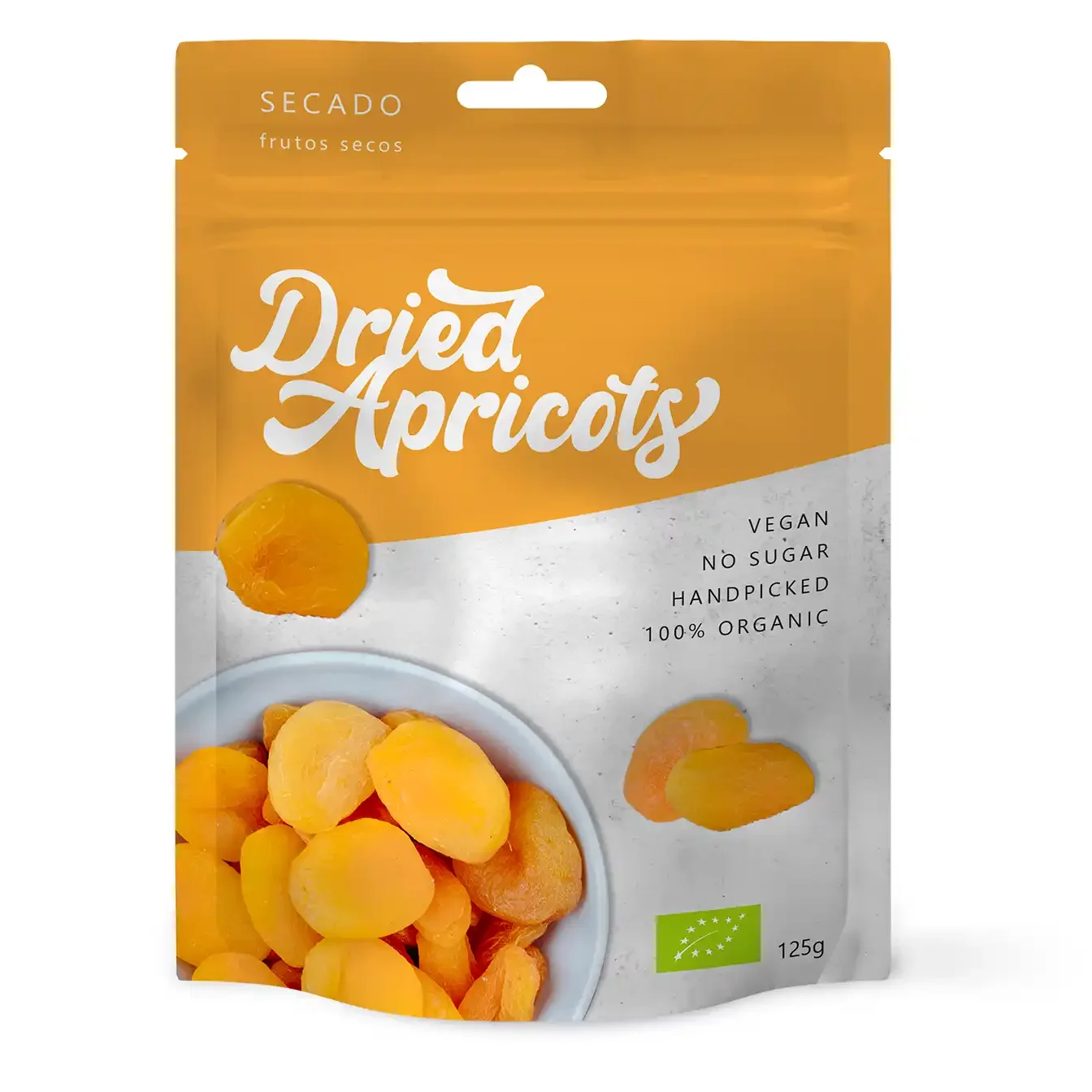
Stand-up bottom
An additional fold in the packaging material creates a pouch's stand-up base. This very stable base construction enables the pouch to stand independently on a flat surface. In addition to the primary function of being able to stand on its own, the stand-up bottom and the resulting bottom fold give the pouch a higher filling volume than a flat pouch. The bottom shape can usually be round, as in doypacks, or trapezoidal, as in deltapacks.
Zipper
A so-called zipper reclosure is often used to make the pouch reclosable. This zipper consists of two plastic lips that can be pressed together, pulled apart, and sealed into the top area of the pouch. This makes it possible to reclose the pouch after it has been opened for the first time and maintain the filling product's freshness to a certain extent.
Tear opening notch
the consumer to tear open the pouch without tools and consume the contents. The tear-opening notch is usually designed as an incision or punched-out arrowhead.
Side sealing seam
The side sealing seam is the two sealed pouch edges and closes it in this area. The side sealing seam requires exceptional quality and strength. Its width can be freely selected according to the length of the pouch. Depending on the contents, filling quantity, and size, the pouch must be able to withstand various pressures and sealing requirements. Optical and functional sealing patterns, such as cross and ripple patterns, can also be created in the sealing seam.
Top sealing seam
A top sealing seam permanently closes the pouch after filling. The side sealing seam requires exceptional quality and strength. Depending on the contents, filling quantity, and size, the pouch must be able to withstand various pressures and tightness requirements. In addition to the technical requirements, wider top sealing seams are often produced to give the pouch a corresponding appearance. Additional functions like hanging devices (euro hole or round hole) are integrated into the top seam.
Sealing seam quality
Sealing seam quality is one of a pouch core criteria. It must meet a wide range of quality and functional criteria. Thanks to our innovative and high-quality sealing technology, our machines can guarantee consistently high sealing seam strength over the long term. This also applies to different packaging materials and mono-materials.
Processability of mono-materials
All of our new machines can process recyclable mono-materials as standard. Thanks to innovative unwinding and sealing technology, new and thinner films and papers can be processed at the same quality and speed.
Filling level
To minimize packaging material and costs, but also from a sustainability perspective, keeping the space between the product fill level and the top seam as small as possible is essential. Some technical processes, such as tightening before head sealing, require a certain amount of space in the headspace of the pouch. Headspace steaming, intended to counteract possible pouch inflation, also requires a certain amount of free space in the head area of the pouch. We are happy to help with the optimum design of the pouch dimensions depending on the intended filling quantity and filling level.
Hanger hole
The hanger hole is primarily used for easy placement on the shelf at the point of sale. The pouches with a (Euro) hole are pushed onto the shelf bars. The choice of hanger hole is up to you and is realized via a separate punch in the pouch packaging machine.
Overview of common pouch details
Details that really matter
-
Stand-up bottom
An additional fold in the packaging material creates a pouch's stand-up base. This very stable base construction enables the pouch to stand independently on a flat surface. In addition to the primary function of being able to stand on its own, the stand-up bottom and the resulting bottom fold give the pouch a higher filling volume than a flat pouch. The bottom shape can usually be round, as in doypacks, or trapezoidal, as in deltapacks.
-
Zipper
A so-called zipper reclosure is often used to make the pouch reclosable. This zipper consists of two plastic lips that can be pressed together, pulled apart, and sealed into the top area of the pouch. This makes it possible to reclose the pouch after it has been opened for the first time and maintain the filling product's freshness to a certain extent.
-
Tear opening notch
the consumer to tear open the pouch without tools and consume the contents. The tear-opening notch is usually designed as an incision or punched-out arrowhead.
-
Side sealing seam
The side sealing seam is the two sealed pouch edges and closes it in this area. The side sealing seam requires exceptional quality and strength. Its width can be freely selected according to the length of the pouch. Depending on the contents, filling quantity, and size, the pouch must be able to withstand various pressures and sealing requirements. Optical and functional sealing patterns, such as cross and ripple patterns, can also be created in the sealing seam.
-
Top sealing seam
A top sealing seam permanently closes the pouch after filling. The side sealing seam requires exceptional quality and strength. Depending on the contents, filling quantity, and size, the pouch must be able to withstand various pressures and tightness requirements. In addition to the technical requirements, wider top sealing seams are often produced to give the pouch a corresponding appearance. Additional functions like hanging devices (euro hole or round hole) are integrated into the top seam.
-
Sealing seam quality
Sealing seam quality is one of a pouch core criteria. It must meet a wide range of quality and functional criteria. Thanks to our innovative and high-quality sealing technology, our machines can guarantee consistently high sealing seam strength over the long term. This also applies to different packaging materials and mono-materials.
-
Processability of mono-materials
All of our new machines can process recyclable mono-materials as standard. Thanks to innovative unwinding and sealing technology, new and thinner films and papers can be processed at the same quality and speed.
-
Filling level
To minimize packaging material and costs, but also from a sustainability perspective, keeping the space between the product fill level and the top seam as small as possible is essential. Some technical processes, such as tightening before head sealing, require a certain amount of space in the headspace of the pouch. Headspace steaming, intended to counteract possible pouch inflation, also requires a certain amount of free space in the head area of the pouch. We are happy to help with the optimum design of the pouch dimensions depending on the intended filling quantity and filling level.
-
Hanger hole
The hanger hole is primarily used for easy placement on the shelf at the point of sale. The pouches with a (Euro) hole are pushed onto the shelf bars. The choice of hanger hole is up to you and is realized via a separate punch in the pouch packaging machine.

We are happy to support you in your pouch packaging project with customized machine and dosing technology.
We look forward to your inquiry.
Phone: +49 2267 699-0
Email: sales@sn-packaging.de


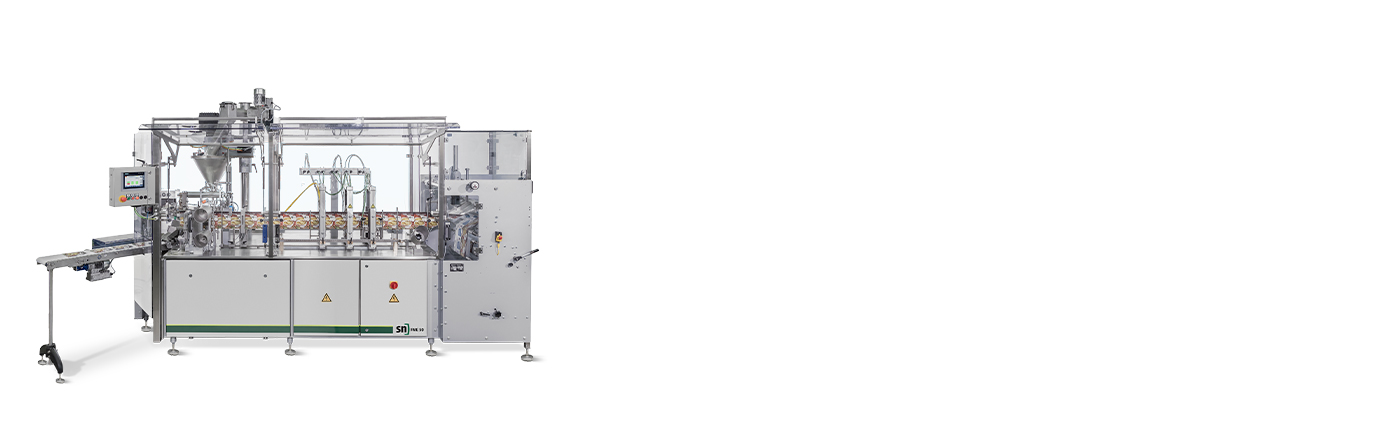
FME 50
Horizontal form, fill and seal machine (HFFS)
Format range pouch width
50 – 170 mm
FFormat range pouch height
70 – 210 mm
Realistic output rate
up to 80 pouches/min.
Exemplary yearly production output (single shift)
about 8 million pouches
(Data dependent on filling properties, pouch size, and production times)
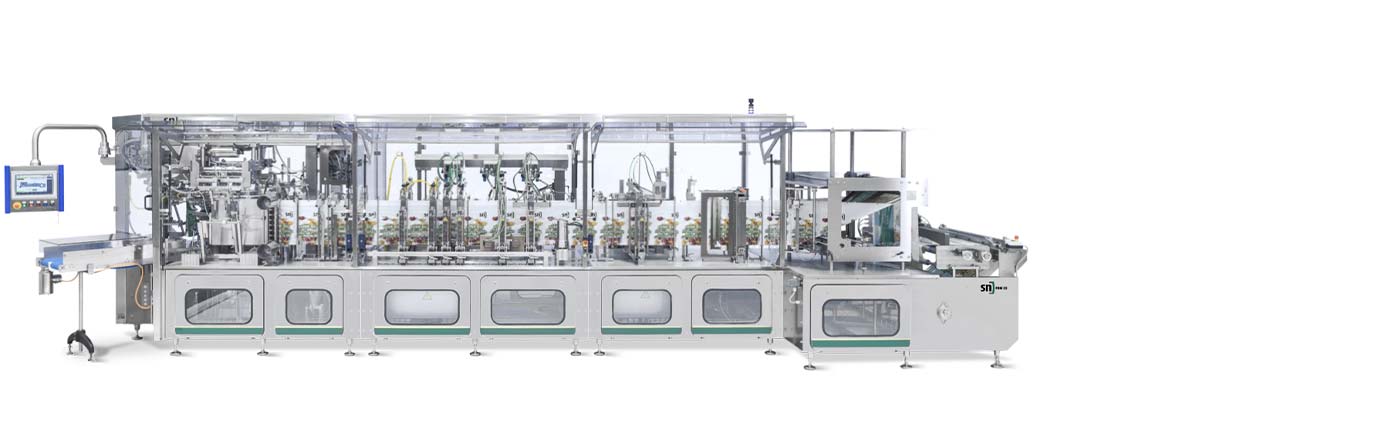
FBM 22
Horizontal form, fill and seal machine (HFFS)
duplex
Format range pouch width
120 – 190 mm
Format range pouch height
100 – 450 mm
Realistic output rate
up to 120 pouches/min.
JExemplary yearly production output (single shift)
about 13 million pouches
(Data dependent on filling properties, pouch size, and production times)
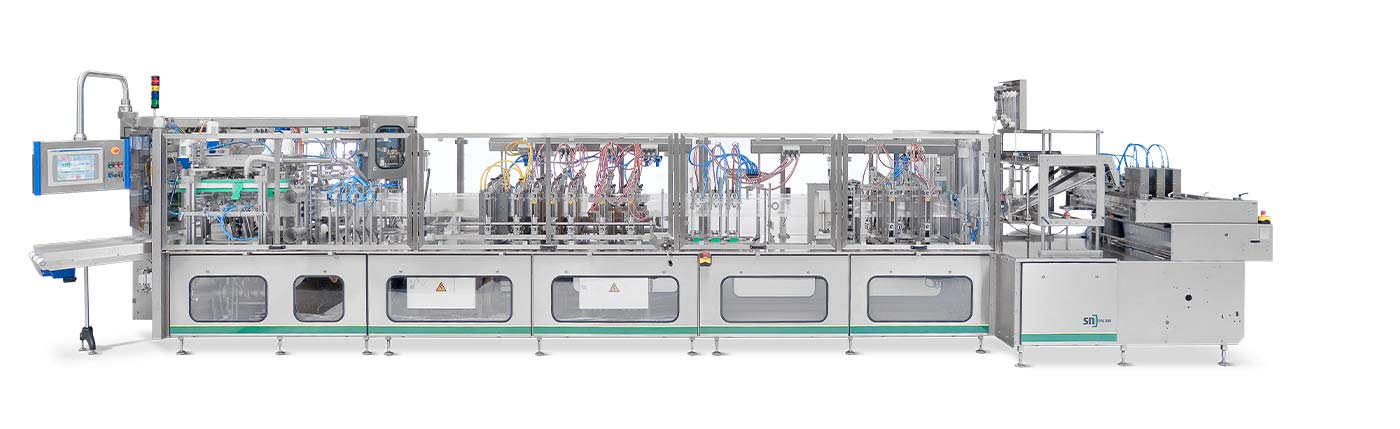
FM 300
Horizontal form, fill and seal machine (HFFS)
Format range pouch width
100 – 191 mm
Format range pouch height
120 – 350 mm
Realistic output rate
up to 180 pouches/min.
Exemplary yearly production output (three shifts)
about 55 million pouches
(Data dependent on filling properties, pouch size, and production times)

Contact
We are happy to support you in your pouch packaging project with customized machine and dosing technology.
We look forward to your inquiry.
Phone: +49 2267 699-0
Email: sales@sn-maschinenbau.de