
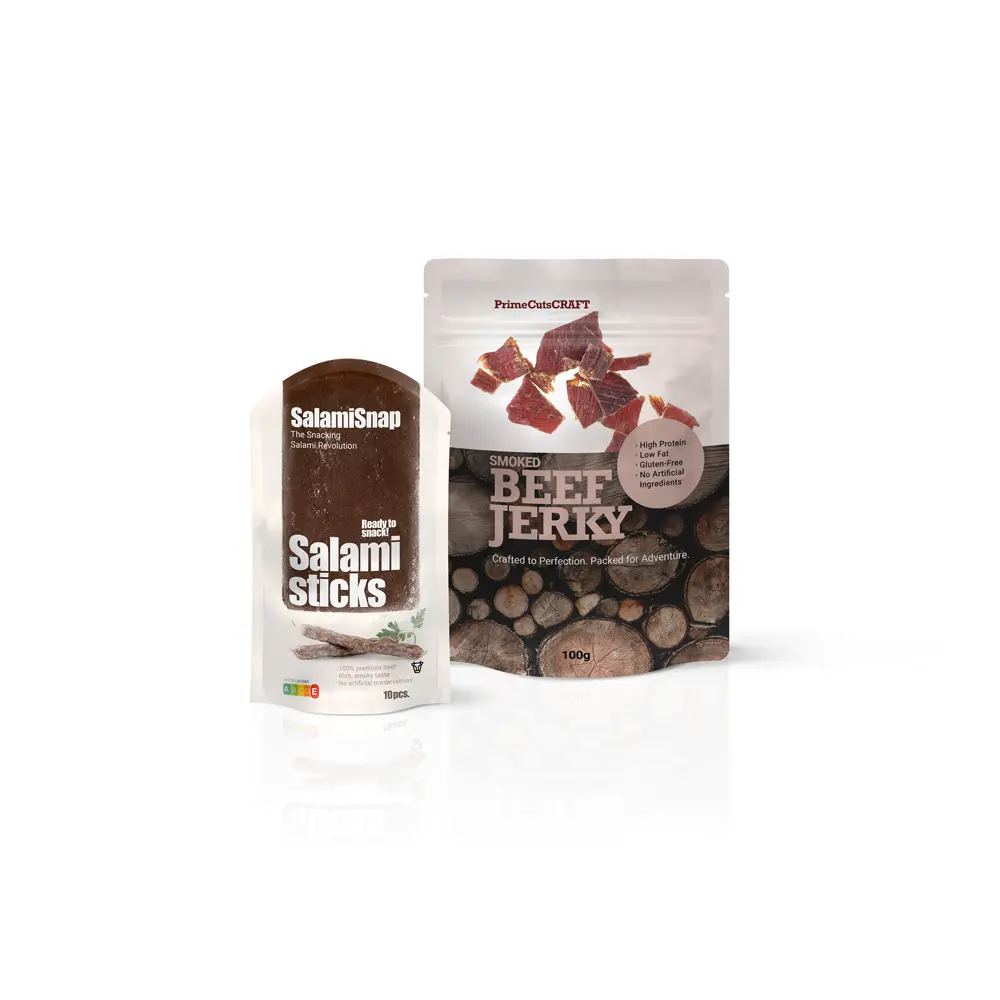
Meat and meat substitutes come in a wide variety of types and forms. From salami sticks and slices to bacon bits and beef jerky, a wide variety of meat products are filled and packaged on our machines. Primary packaging is essential, particularly in terms of product protection and shelf life. During the filling process, it is particularly important to dispense the product into the pouch efficiently and in a controlled manner.







High filling speed
through customized dosing concepts
Meat and meat substitutes come in many different shapes and sizes. With salami sticks, for example, it is particularly important to pack them into the pouch in a compact, controlled manner, ensuring they all face the same way. Special dosing and filling hoppers are used for this purpose to ensure a smooth flow of product.
Compliance with the highest hygiene standards
thanks to its easy-clean and wet machine execution
The filling and packaging of meat products, as well as vegan or vegetarian alternatives, require the highest standards of hygiene. Of course, our machines can be built in both wet or washdown machine execution.
Long shelf life
thanks to minimal residual oxygen levels in the pouch
To ensure that high-quality meat and meat substitute products retain their flavor and to ensure their shelf life is maximized, gas-tight pouch packaging is essential. In particular, the residual oxygen level in the pouch must be reduced to a minimum. We achieve this through a specially developed product gassing process.


High speeds and machine output
With our pouch packaging machines, you can produce at consistently high speeds, even with large filling volumes. Depending on the dosage, machine outputs of 40 to 210 pouches per minute are possible. For dried meat products and salami sticks, we recommend using simplex to triplex machines.


Quick and easy format changeovers in <15 minutes
Our machines enable partly tool-free format changeovers in less than 15 minutes, depending on the machine type. Using the integrated recipe management system, production and machine parameters for individual products and formats can be conveniently loaded via the HMI. This reduces downtime and increases machine utilization as well as productivity – especially during frequent product changes. We offer various levels of automation to make changeovers particularly quick and easy.
Precise and efficient filling
Dry meat and salami sticks are typically packaged using multihead weighers, which combine precise weight control with high speed. During the filling process, the products are handled with particular care to prevent any loss of quality. The process is supplemented by targeted product gassing, which reduces the residual oxygen levels in the pouch to a minimum. The result: products that stay fresh for longer, an extended shelf life, and consistently high product quality.


High-quality products deserve premium pouch quality
The essence of designing a pouch

Stand-up bottom
An additional fold in the packaging material creates a pouch's stand-up base. This very stable base construction enables the pouch to stand independently on a flat surface. In addition to the primary function of being able to stand on its own, the stand-up bottom and the resulting bottom fold give the pouch a higher filling volume than a flat pouch. The bottom shape can usually be round, as in doypacks, or trapezoidal, as in deltapacks.
Tear opening notch
The tear-opening notch is a punched hole in the upper side seal seam of the pouch. This punching makes it easier for the consumer to tear open the pouch without tools and consume the contents. The tear-opening notch is usually designed as an incision or punched-out arrowhead.
Side sealing seam
The side sealing seam is the two sealed pouch edges and closes it in this area. The side sealing seam requires exceptional quality and strength. Its width can be freely selected according to the length of the pouch. Depending on the contents, filling quantity, and size, the pouch must be able to withstand various pressures and sealing requirements. Optical and functional sealing patterns, such as cross and ripple patterns, can also be created in the sealing seam.
Top sealing seam
A top sealing seam permanently closes the pouch after filling. The side sealing seam requires exceptional quality and strength. Depending on the contents, filling quantity, and size, the pouch must be able to withstand various pressures and tightness requirements. In addition to the technical requirements, wider top sealing seams are often produced to give the pouch a corresponding appearance. Additional functions like hanging devices (euro hole or round hole) are integrated into the top seam.
Sealing seam quality
Sealing seam quality is one of a pouch`s core criteria. It must meet a wide range of quality and functional criteria. Thanks to our innovative and high-quality sealing technology, our machines can guarantee consistently high sealing seam strength over the long term. This also applies to different packaging materials and mono-materials.
Processability of mono-materials
All of our new machines can process recyclable mono-materials as standard. Thanks to innovative unwinding and sealing technology, new and thinner films and papers can be processed at the same quality and speed.
Overview of common pouch details
Details that really matter
-
Stand-up bottom
An additional fold in the packaging material creates a pouch's stand-up base. This very stable base construction enables the pouch to stand independently on a flat surface. In addition to the primary function of being able to stand on its own, the stand-up bottom and the resulting bottom fold give the pouch a higher filling volume than a flat pouch. The bottom shape can usually be round, as in doypacks, or trapezoidal, as in deltapacks.
-
Tear opening notch
The tear-opening notch is a punched hole in the upper side seal seam of the pouch. This punching makes it easier for the consumer to tear open the pouch without tools and consume the contents. The tear-opening notch is usually designed as an incision or punched-out arrowhead.
-
Side sealing seam
The side sealing seam is the two sealed pouch edges and closes it in this area. The side sealing seam requires exceptional quality and strength. Its width can be freely selected according to the length of the pouch. Depending on the contents, filling quantity, and size, the pouch must be able to withstand various pressures and sealing requirements. Optical and functional sealing patterns, such as cross and ripple patterns, can also be created in the sealing seam.
-
Top sealing seam
A top sealing seam permanently closes the pouch after filling. The side sealing seam requires exceptional quality and strength. Depending on the contents, filling quantity, and size, the pouch must be able to withstand various pressures and tightness requirements. In addition to the technical requirements, wider top sealing seams are often produced to give the pouch a corresponding appearance. Additional functions like hanging devices (euro hole or round hole) are integrated into the top seam.
-
Sealing seam quality
Sealing seam quality is one of a pouch`s core criteria. It must meet a wide range of quality and functional criteria. Thanks to our innovative and high-quality sealing technology, our machines can guarantee consistently high sealing seam strength over the long term. This also applies to different packaging materials and mono-materials.
-
Processability of mono-materials
All of our new machines can process recyclable mono-materials as standard. Thanks to innovative unwinding and sealing technology, new and thinner films and papers can be processed at the same quality and speed.

We are happy to support you in your pouch packaging project with customized machine and dosing technology.
We look forward to your inquiry.
Phone: +49 2267 699-0
Email: sales@sn-packaging.de


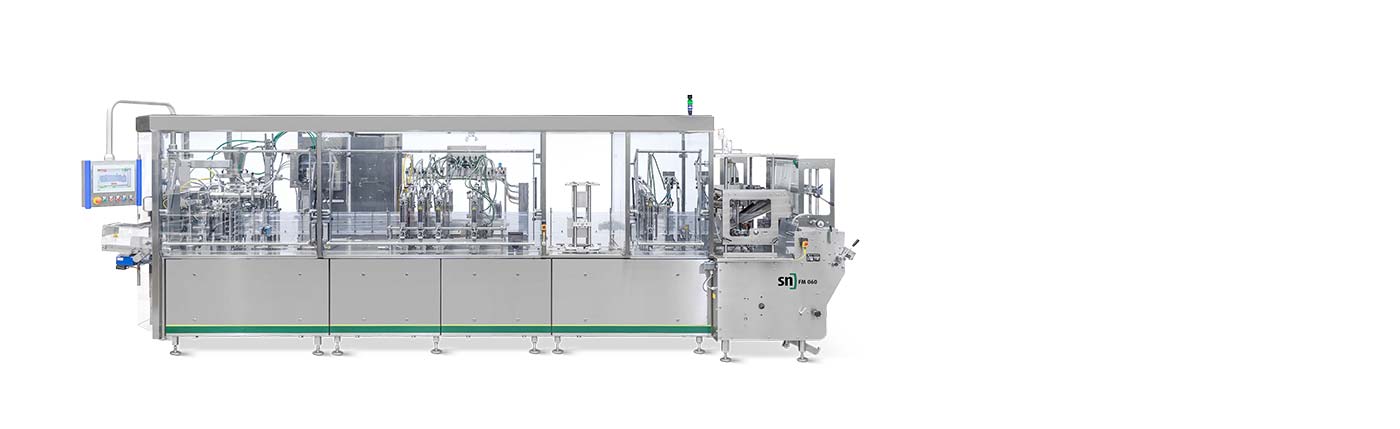
FM 060
Horizontal form, fill and seal machine (HFFS) simplex
Format range pouch width
40 – 220 mm
Format range pouch height
50 – 250 mm
Realistic output rate
up to 60 pouches/min.
Exemplary yearly production output (single shift)
about 6 million pouches
(Data dependent on filling properties, pouch size, and production times)
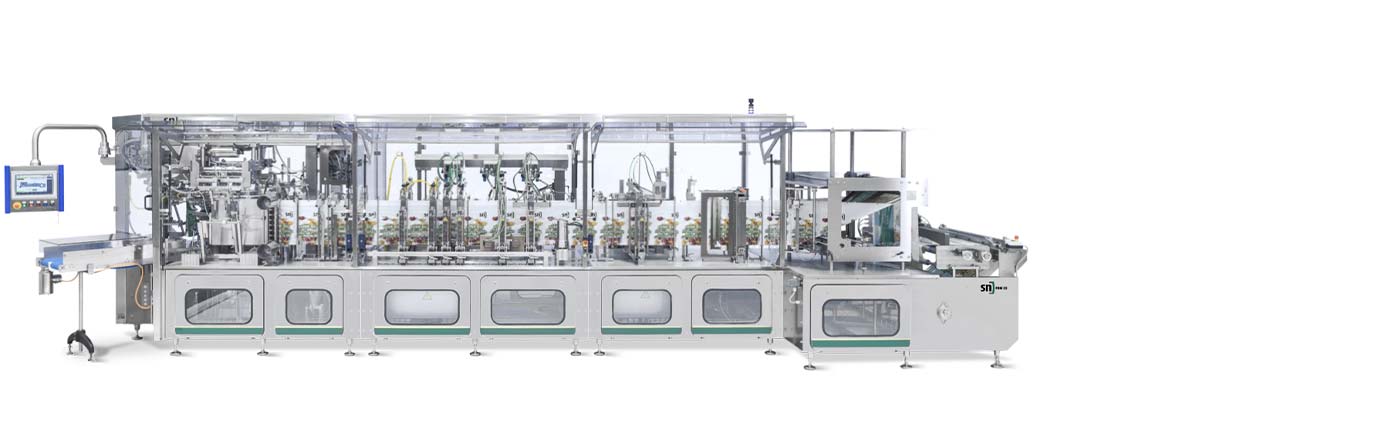
FBM 22
Horizontal form, fill and seal machine (HFFS) duplex
Format range pouch width
120 – 190 mm
Format range pouch height
100 – 350 mm
Realistic output rate
up to 120 pouches/min.
Exemplary yearly production output (single shift)
about 13 million pouches
(Data dependent on filling properties, pouch size, and production times)
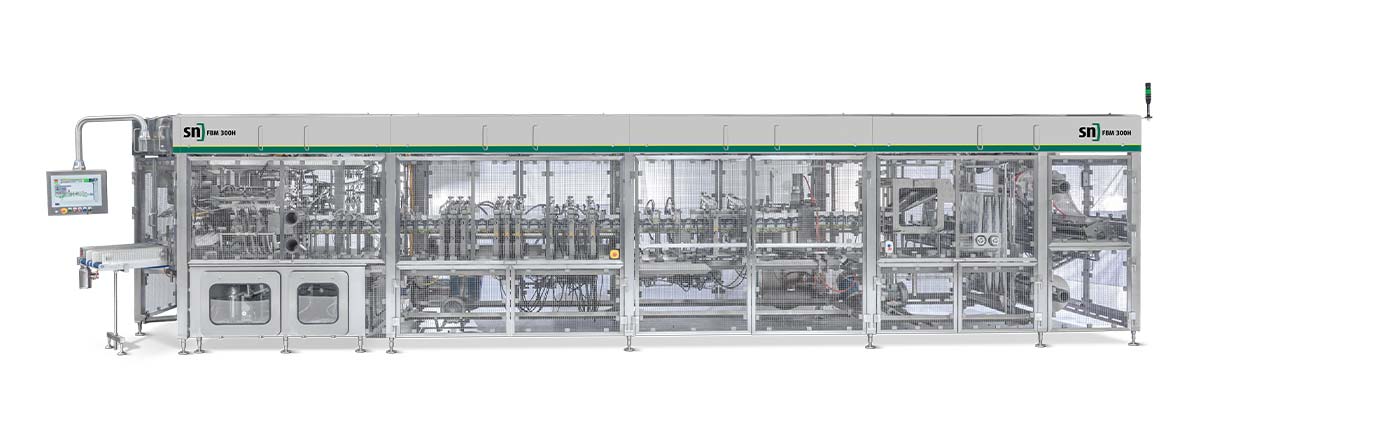
FMH 300
Horizontal form, fill and seal machine (HFFS)
Format range pouch width
115 – 194 mm
Format range pouch height
80 – 350 mm
Realistic output rate
up to 180 pouches/min.
Exemplary yearly production output (three shifts)
about 50 million pouches
(Data dependent on filling properties, pouch size, and production times)

Contact
We are happy to support you in your pouch packaging project with customized machine and dosing technology.
We look forward to your inquiry.
Phone: +49 2267 699-0
Email: sales@sn-packaging.de